
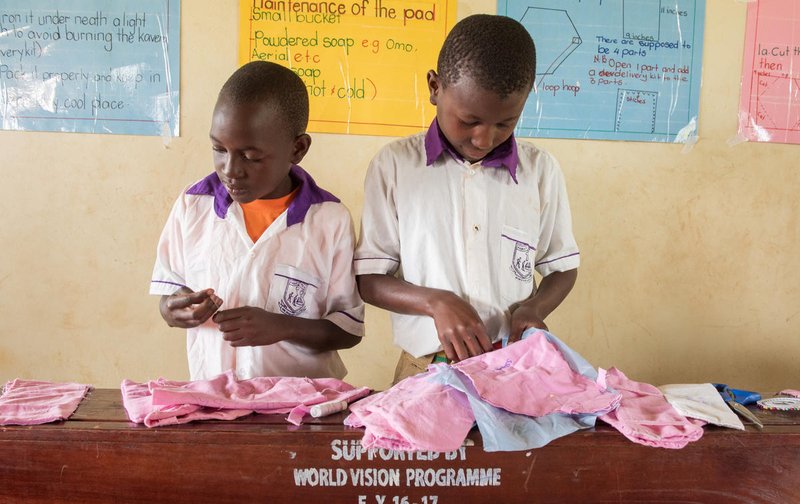
Government distributes 12.2 million sanitary pads to girls in public schools in 2025 and allocates GHS 292.4 million in the 2026 Budget to sustain the menstrual hygiene initiative nationwide.
By Education Correspondent
A national programme directed at menstrual hygiene in public schools has recorded the distribution of 12.2 million packs of sanitary pads to schoolgirls across Ghana during the 2025 academic year.
The disclosure was made during the 2026 State of the Nation Address, where President confirmed that the intervention forms part of a structured policy to reduce absenteeism among female learners and remove gender-related obstacles to schooling.
The initiative, introduced as a public education measure, seeks to ensure that girls are not compelled to miss lessons on account of menstrual challenges. For many families in low-income communities, the regular purchase of sanitary products presents difficulty. The provision of free supplies within schools addresses that burden directly.
Budgetary Commitment for Continuity
To sustain the programme, government has allocated GHS 292.4 million in the 2026 national budget. The appropriation secures continuity of supply and broadens coverage within public basic and secondary schools.
Officials describe the allocation as an investment in educational retention and gender equity. Absenteeism linked to menstrual hygiene has long been cited in education reports as a contributory factor to uneven participation between male and female learners, particularly in rural districts.
By integrating menstrual hygiene support into the education financing framework, the State positions the matter within mainstream policy rather than charitable outreach.
Attendance, Dignity, and Academic Progress
School administrators have observed that consistent access to sanitary products improves attendance patterns and classroom concentration. Girls who previously remained at home during menstrual periods are better able to maintain academic continuity.
Education specialists note that regular attendance during adolescence correlates with improved examination performance and lower dropout rates. In that regard, the sanitary pad distribution programme intersects with broader national objectives concerning literacy, completion rates, and female participation in higher education.
The policy also carries a social dimension. The presence of reliable hygiene support within schools reduces stigma and fosters confidence among adolescent girls navigating puberty.
A Structured Gender Intervention
The sanitary pad initiative forms part of a wider education reform programme outlined in the 2026 address, encompassing infrastructure development, curriculum reform, and inclusive education financing. Within that framework, the menstrual hygiene intervention addresses a specific and measurable barrier to participation.
Public health advocates have long maintained that menstrual management must be treated as an education issue as well as a health matter. The integration of budgetary provision reflects that recognition.
Sustaining the Programme
The effectiveness of the initiative will depend upon distribution logistics, monitoring, and accountability at district and school levels. Education observers indicate that consistent supply chains and transparent reporting systems will be central to long-term impact.
The allocation of GHS 292.4 million signals firm fiscal backing. Whether implementation matches appropriation shall determine the measure’s enduring value.
Within the broader narrative of Ghana’s education reform, the distribution of 12.2 million sanitary pads stands as a targeted intervention grounded in practical necessity. Attendance secured, dignity preserved, and learning uninterrupted remain the declared objectives.