
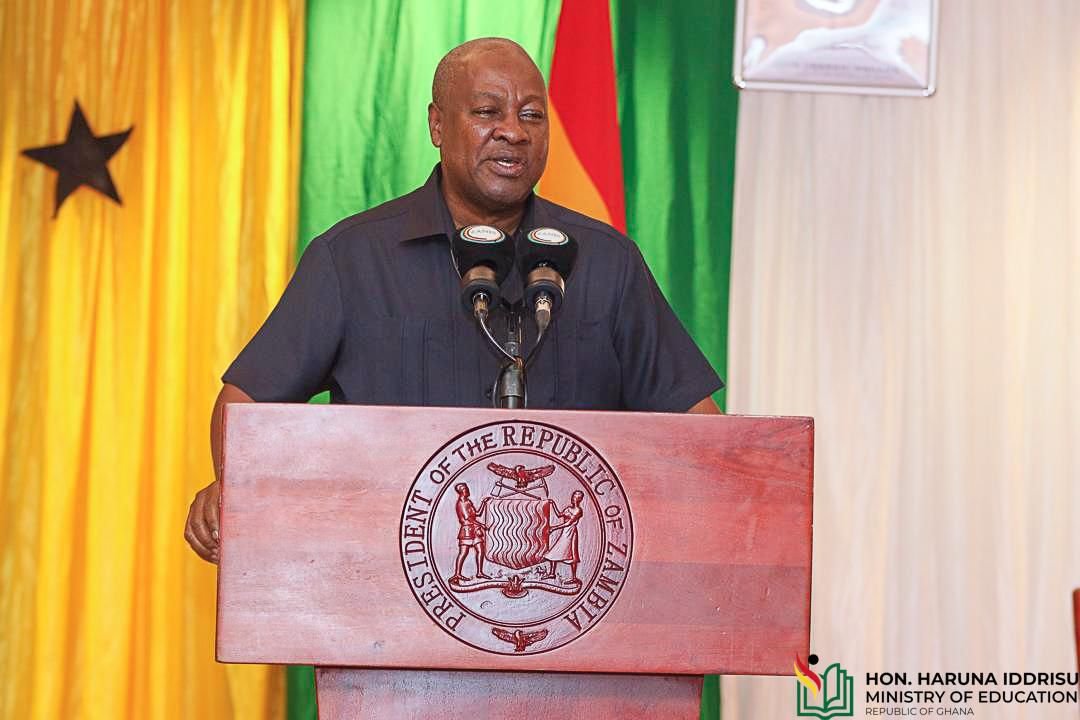
SONA 2026: President John Dramani Mahama increases daily feeding grant for students in public special schools from GHS 8 to GHS 15, strengthening support for learners with disabilities across Ghana.
By Education Correspondent
In what may prove one of the most practical interventions announced during the 2026 State of the Nation Address, President has ordered a substantial increase in the daily feeding grant for students in public special schools.
Henceforth, the allocation rises from GHS 8.00 to GHS 15.00 per child for the 2025 to 2026 academic year. The adjustment, though expressed in figures, carries implications far beyond arithmetic.
A Question of Dignity, Not Charity
For years, administrators of special schools have quietly contended with the strain of stretching limited feeding grants to meet the nutritional needs of learners with disabilities. The old rate, they maintained, scarcely kept pace with prevailing food prices. Meals were served, yes. But often under constraint.
By raising the grant to GHS 15.00, government signals that the matter is not peripheral. Nutrition within special schools is not an optional courtesy. It is integral to health, concentration, and academic progress.
In the words delivered before Parliament, the increment reflects a resolve to address the unique dietary and health needs of learners with disabilities. In plainer terms, the State has recognised that eight cedis could no longer do the job.
Practical Relief for Institutions
Headteachers of public special schools have long borne the burden of reconciling modest feeding allocations with rising operational costs. Suppliers, meanwhile, have not been inclined to charity. The revised grant promises measurable relief.
Education observers note that adequate nutrition directly affects attendance, energy levels, and learning outcomes. For learners with certain medical or developmental conditions, diet is not incidental. It is essential.
Thus, while the policy may not command banner headlines in louder political seasons, its consequence at the school level is immediate and tangible.
Part of a Broader Inclusion Agenda
The feeding grant increase sits within a wider framework of reforms aimed at strengthening inclusive education. During the same address, the President referenced the amended Act, which establishes a dedicated funding stream for Free Education for learners with special needs beginning in the 2026 academic year.
Plans were also outlined for the construction of a modern Special Needs School in Ho and the rehabilitation of the existing facility in Akropong, Akuapem. The feeding grant adjustment, therefore, is neither isolated nor symbolic. It forms part of a structured policy shift.
The Measure of Commitment
Critics of social policy are often quick to dismiss incremental increases as modest gestures. Yet in institutional life, increments matter. A rise from GHS 8.00 to GHS 15.00 represents near doubling of the daily allocation. For boarding institutions managing hundreds of learners, the difference is significant.
As one education analyst observed privately, “It may not trend on social media, but it changes what is on the plate.”
The enduring test will lie in timely disbursement and accountability. Should funds flow consistently, special schools across Ghana may find themselves better equipped to provide balanced meals without compromise.
For now, the message conveyed in Parliament was plain. In matters of special education, welfare cannot remain an afterthought. Where the vulnerable are concerned, the ledger must reflect conscience as well as calculation.




[…] Mahama announces expansion of the No-Fees-Stress Initiative in SONA 2026, targeting over 220,000 first-year tertiary students across Ghana. Full details on funding, eligibility, and […]