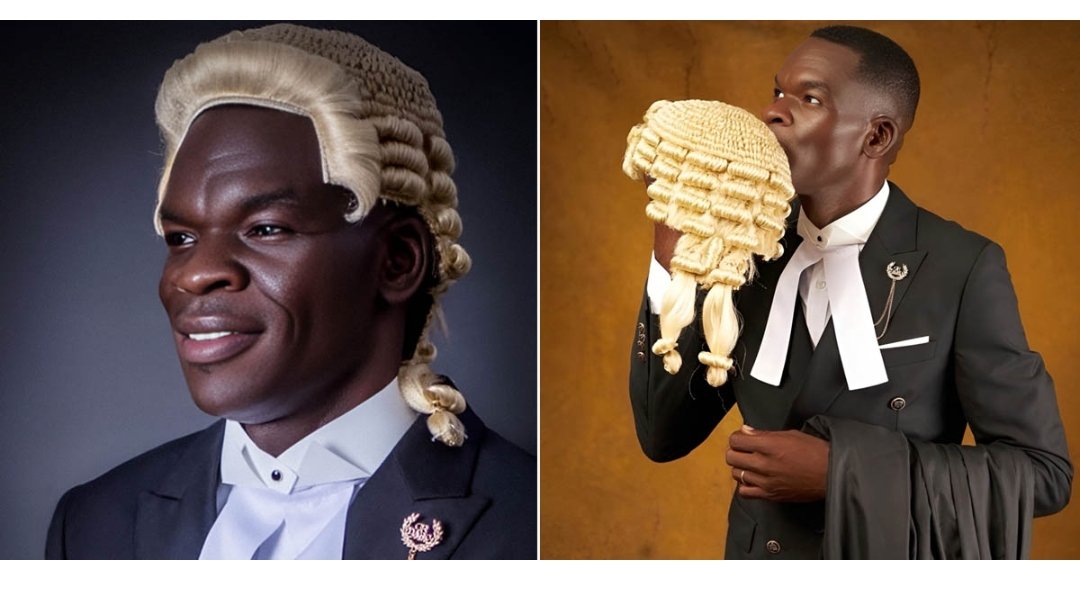
Juventus Duorinaah makes history as Ghana’s first deaf lawyer after overcoming communication barriers and academic challenges to be called to the bar in 2024.
Ghana Records Historic Milestone in Legal Profession
Ghana has recorded a historic milestone in its legal profession as becomes the first deaf lawyer in the country and one of the few in West Africa.
His achievement marks a significant moment for disability inclusion in Ghana’s legal system, demonstrating that physical limitations do not define intellectual ability or professional excellence.
Despite the demanding nature of legal education and professional training, Duorinaah navigated academic systems that were not originally designed to support students with hearing impairments.
Early Challenges and Determination
Duorinaah’s interest in law began in 2008 during the period he was seeking admission to . Even the admission process presented accessibility challenges.
With the support of his elder brother and a strong personal determination, he pushed forward and later enrolled in the Bachelor of Laws (LLB) programme at the university.
His journey through legal education required exceptional discipline and persistence, especially in an environment where he was often the only deaf student in his class.
Pursuing Advanced Legal Studies Abroad
After completing his undergraduate studies, Duorinaah further expanded his academic horizon by pursuing a Master of Laws (LL.M.) at in the United Kingdom.
Studying abroad exposed him to multiple legal systems and international perspectives on law and human rights.
However, communication barriers remained a major challenge. At Cardiff University, he studied without sign language interpreters and instead relied on a palantypist, a professional who transcribes spoken lectures into real-time text.
This system demanded constant concentration and patience, as he followed lectures through live transcription while engaging with complex legal material.
Navigating Social and Academic Isolation
Beyond academic hurdles, Duorinaah also faced social challenges. Having last studied with other deaf peers in 2007, he often found himself isolated in lecture halls and social spaces.
Group discussions, informal conversations, and spontaneous classroom debates, which are central to university life, were sometimes difficult to access.
Yet he continued to push forward. With support from friends and faculty members, he stayed committed to his studies and completed his academic training.
Mentorship and Support Systems
Throughout his journey, Duorinaah credits several individuals who shaped his development.
His family played a crucial role, particularly his elder brother who encouraged him during the early stages of his academic journey. His wife also provided steady emotional support during the demanding years of legal training.
At the , he received mentorship from respected legal scholars, including and , who influenced his understanding of law, justice, and human rights.
Called to the Bar in Ghana
Duorinaah reached the pinnacle of his legal training when he was called to the bar at the in 2024.
He is currently completing his pupilage, the final stage of legal training required before fully establishing his legal career.
His accomplishment represents a powerful message for persons with disabilities across Ghana and Africa.
Inspiring the Next Generation
Beyond his professional ambitions, Duorinaah is committed to mentoring young deaf students who aspire to pursue careers in law.
He encourages individuals with disabilities to view their challenges not as barriers but as opportunities to demonstrate resilience and innovation.
“Never see your disabilities as barriers. Instead, view them as opportunities to do something different,” he said.
Duorinaah also calls on parents to invest in the education of children with disabilities and to recognise their potential.
Looking ahead, he hopes to become a judge and contribute to improving justice delivery in Ghana while ensuring that deaf citizens understand and can exercise their legal rights.
His journey stands as a powerful reminder that determination, support, and access to education can break barriers and create new paths for inclusion.