Ferdinand | Education Ghana | March 1 |SONA 2026: Mahama Outlines Sweeping Education Reforms, Infrastructure Expansion and Teacher Housing Plan
President John Dramani Mahama’s 2026 State of the Nation Address highlights major education reforms, including basic education restructuring, TVET expansion, three new technical universities, and 50,000 housing units for teachers.
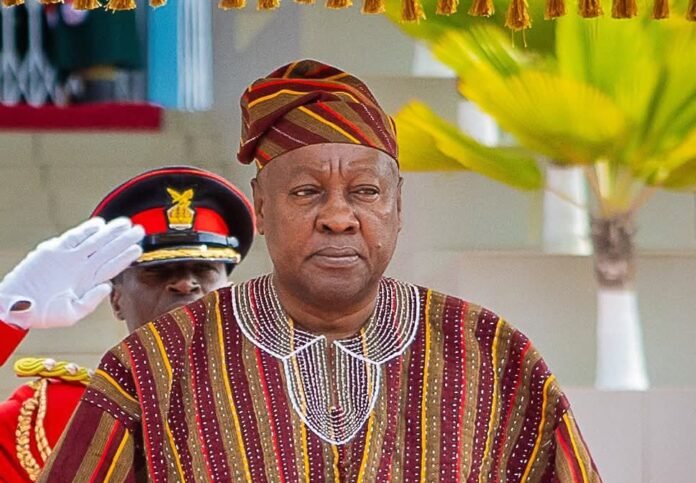
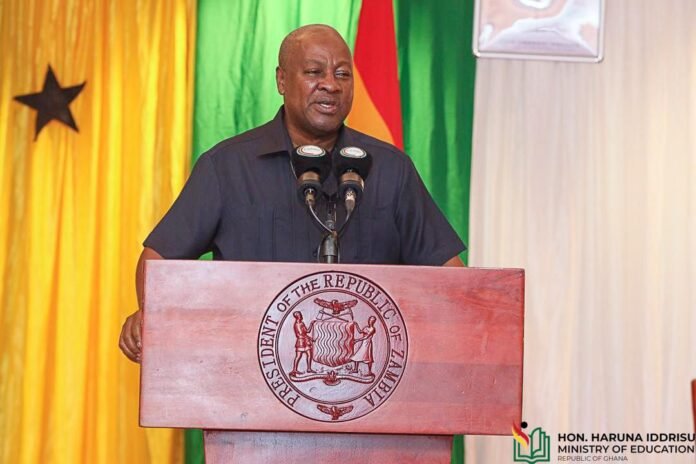
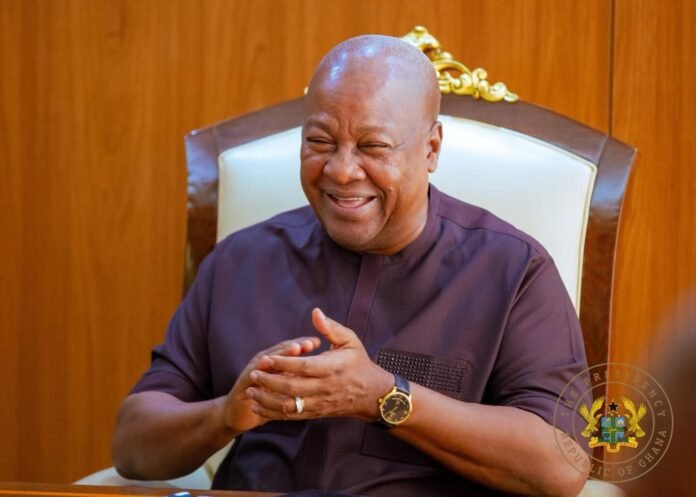
President has outlined an ambitious education reform agenda during the 2026 State of the Nation Address delivered on Friday, 27 February 2026, at Parliament House.
Addressing Parliament, the President described education as central to Ghana’s national transformation and reported that flagship initiatives contained in the government’s Reset Manifesto were fully implemented in 2025.
No-Fees-Stress Initiative Benefits Over 152,000 Students
Among the key achievements cited was the successful rollout of the No-Fees-Stress Initiative, launched in Koforidua. The programme has so far benefited 152,698 validated first-year students in public tertiary institutions. The figure is projected to exceed 220,000 beneficiaries in the 2026 academic year.
In collaboration with the , access to student loans has been extended to law students, broadening financing opportunities for professional legal education.
Additionally, the Free Tertiary Education Policy for Persons with Disabilities has been launched and is currently supporting eligible students across public tertiary institutions nationwide.
The President further reported stable and uninterrupted food supply under the Free Senior High School Programme throughout the 2025 academic year.
Major Education Bills Passed in 2025
To strengthen governance and accountability in the sector, Parliament passed several key pieces of legislation in 2025, including:
- The Kwame Nkrumah University of Science and Technology Bill, 2025
- The Ghana Scholarship Bill, 2025
- The Change of Universities’ Names Bills, 2025
- The University for Development Studies Bill, 2025
- The Ghana Education Trust Fund Bill, 2025
The president also announced plans to introduce new legislation aimed at easing regulatory bottlenecks in private tertiary education, including making institutional chartering optional.
Major Shift Towards Basic Education
Describing basic education as the foundation of national development, President Mahama announced a major policy shift to rebalance investment in favour of early and primary education.
The Standards-Based Curriculum from Kindergarten to Primary Six is currently under review to incorporate robotics, coding, and the responsible integration of generative artificial intelligence. Artificial intelligence education will be introduced in an age-appropriate manner, with emphasis on ethical use, digital responsibility, and critical thinking.
To address the persistent problem of schools under trees, the government has programmed the construction of 200 kindergarten blocks, 200 primary school blocks, and 200 junior high school blocks nationwide in the 2026 financial year.
The President further confirmed that all outstanding Capitation Grant arrears owed to public basic schools and BECE registration subsidies have been fully cleared.
Expanded Support for Special Needs Education
Under the amended GETFund Act, a dedicated funding framework has been established to implement free education for learners with special needs beginning in the 2026 academic year.
The government has also increased the daily feeding grant for students in public special schools from GHS 8.00 to GHS 15.00 for the 2025/2026 academic year. A modern special needs school will be constructed in Ho in the Volta Region, while the existing facility in Akropong, Akuapem, will be rehabilitated and upgraded.
Sanitary Pads and Gender Equity
In 2025, government distributed 12.2 million packs of sanitary pads to girls in public schools nationwide. An allocation of GHS 292.4 million has been made in the 2026 Budget to sustain the initiative, aimed at reducing absenteeism linked to menstrual hygiene challenges.
RELATED ARTICLES
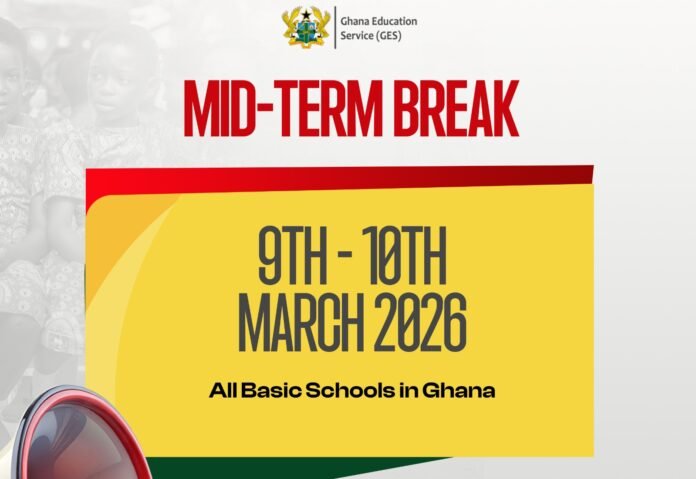
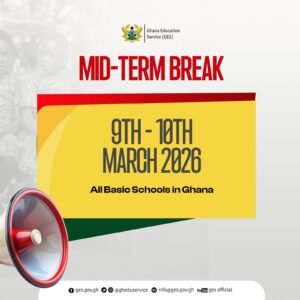
- GES Announces March 9–10 Midterm Break for Basic Schools
- GES, NIA Strengthen Collaboration Ahead of Mass Registration of Children Aged 6–14
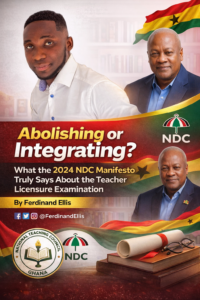
- Abolishing or Integrating? What the 2024 NDC Manifesto Truly Says About the Teacher Licensure Examination
SHS Upgrades and TVET Expansion
To reduce congestion and improve access at the secondary level, government will upgrade 30 Category C schools to Category B and 10 Category B schools to Category A status. Existing Category A schools will also undergo expansion.
Technical and Vocational Education and Training remains central to the government’s employment strategy. Six Regional TVET Centres of Excellence will be constructed to equip youth with industry-relevant skills. The national curriculum is also under review to align with the OECD Future of Education and Skills framework.
New Universities and Technical Institutions
To expand tertiary access and promote regional balance, government has secured partnerships to establish two public universities in Kintampo in the Bono East Region and Jasikan in the Oti Region. A grant from China will support the establishment of another public university in Damongo.
Additionally, three new technical universities will be established to strengthen skills development, innovation, and industrialisation.
50,000 Housing Units for Teachers
In a major welfare intervention, the President announced a joint teacher housing initiative involving the District Assemblies Common Fund, GETFund, the Ghana National Association of Teachers, and GES Occupational Pension Scheme administrators. The partnership aims to deliver 50,000 housing units for teachers, particularly in rural and underserved communities.
According to the President, the initiative is designed to improve living conditions, enhance retention, and ensure educators can serve and retire with dignity.
Education as the Anchor of Transformation
Concluding the education segment of his address, President Mahama reaffirmed government’s commitment to aligning education policy with national development goals, industrial growth, and social equity.
The 2026 SONA signals a broad restructuring of Ghana’s education landscape, spanning early childhood education, digital curriculum reforms, infrastructure expansion, tertiary access, and teacher welfare.
♥Copyright Notice: Content on This Website is Copyright Protected. No Part of this Content should be Reproduced without the Consent of the Author(s) or Recognition of the source of the Content.© 2026 Ellis Multimedia: New.EducationGhana.org All Rights Reserved.♥