Home Blog Page 4

12.2 Million Sanitary Pads Distributed to Schoolgirls as Government Allocates GHS 292.4 Million for 2026

0
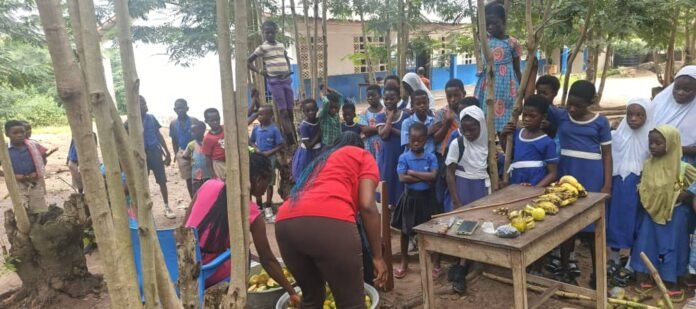
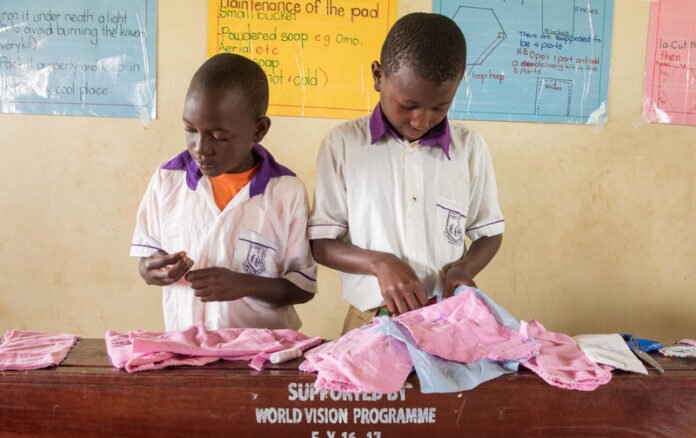
Boys in the Life Skills Club at Kasubi Primary School participate in making reusable sanitary pads as a way to support the girls and to keep them from bullying the girls--something they've often done in the past. Summary: Life Skills Club at Kasubi Primary School. The school administrators noticed that each month the older girls would miss school multiple times during their period. This affected their studies. Some girls even dropped out of school once their period started, making them more vulnerable to early childhood marriage. World Vision staff trained the club members to make reusable sanitary pads out of readily available materials. It has made a difference. The girls can now continue to attend school when they’re having their period. And since boys help make the pads, they’re learning to be more sensitive to the girls. Before they often bullied girls during their periods, which only exacerbated the girls’ desire to not attend school.

Government distributes 12.2 million sanitary pads to girls in public schools in 2025 and allocates GHS 292.4 million in the 2026 Budget to sustain the menstrual hygiene initiative nationwide.

By Education Correspondent

A national programme directed at menstrual hygiene in public schools has recorded the distribution of 12.2 million packs of sanitary pads to schoolgirls across Ghana during the 2025 academic year.

The disclosure was made during the 2026 State of the Nation Address, where President confirmed that the intervention forms part of a structured policy to reduce absenteeism among female learners and remove gender-related obstacles to schooling.

The initiative, introduced as a public education measure, seeks to ensure that girls are not compelled to miss lessons on account of menstrual challenges. For many families in low-income communities, the regular purchase of sanitary products presents difficulty. The provision of free supplies within schools addresses that burden directly.

Budgetary Commitment for Continuity

To sustain the programme, government has allocated GHS 292.4 million in the 2026 national budget. The appropriation secures continuity of supply and broadens coverage within public basic and secondary schools.

Officials describe the allocation as an investment in educational retention and gender equity. Absenteeism linked to menstrual hygiene has long been cited in education reports as a contributory factor to uneven participation between male and female learners, particularly in rural districts.

By integrating menstrual hygiene support into the education financing framework, the State positions the matter within mainstream policy rather than charitable outreach.

Attendance, Dignity, and Academic Progress

School administrators have observed that consistent access to sanitary products improves attendance patterns and classroom concentration. Girls who previously remained at home during menstrual periods are better able to maintain academic continuity.

Education specialists note that regular attendance during adolescence correlates with improved examination performance and lower dropout rates. In that regard, the sanitary pad distribution programme intersects with broader national objectives concerning literacy, completion rates, and female participation in higher education.

The policy also carries a social dimension. The presence of reliable hygiene support within schools reduces stigma and fosters confidence among adolescent girls navigating puberty.

A Structured Gender Intervention

The sanitary pad initiative forms part of a wider education reform programme outlined in the 2026 address, encompassing infrastructure development, curriculum reform, and inclusive education financing. Within that framework, the menstrual hygiene intervention addresses a specific and measurable barrier to participation.

Public health advocates have long maintained that menstrual management must be treated as an education issue as well as a health matter. The integration of budgetary provision reflects that recognition.

Sustaining the Programme

The effectiveness of the initiative will depend upon distribution logistics, monitoring, and accountability at district and school levels. Education observers indicate that consistent supply chains and transparent reporting systems will be central to long-term impact.

The allocation of GHS 292.4 million signals firm fiscal backing. Whether implementation matches appropriation shall determine the measure’s enduring value.

Within the broader narrative of Ghana’s education reform, the distribution of 12.2 million sanitary pads stands as a targeted intervention grounded in practical necessity. Attendance secured, dignity preserved, and learning uninterrupted remain the declared objectives.
Special Schools Feeding Grant Increased from GHS 8 to GHS 15 in Major Welfare Boost

1
Presidency Invites Organised Labour to National Dialogue on Salary Reforms, Pensions

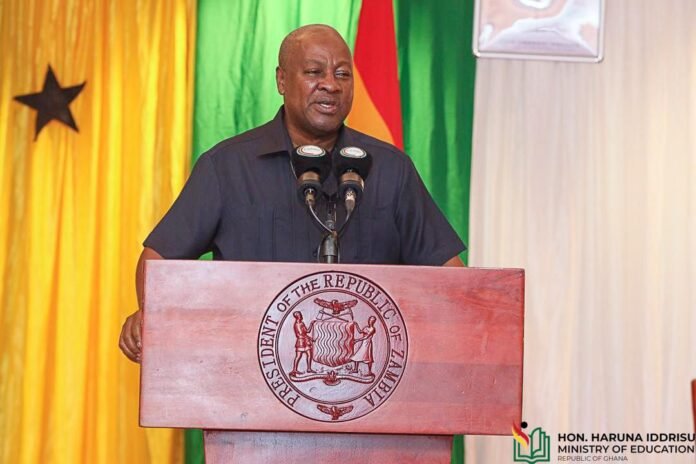
SONA 2026: President John Dramani Mahama increases daily feeding grant for students in public special schools from GHS 8 to GHS 15, strengthening support for learners with disabilities across Ghana.

By Education Correspondent

In what may prove one of the most practical interventions announced during the 2026 State of the Nation Address, President has ordered a substantial increase in the daily feeding grant for students in public special schools.

Henceforth, the allocation rises from GHS 8.00 to GHS 15.00 per child for the 2025 to 2026 academic year. The adjustment, though expressed in figures, carries implications far beyond arithmetic.

A Question of Dignity, Not Charity

For years, administrators of special schools have quietly contended with the strain of stretching limited feeding grants to meet the nutritional needs of learners with disabilities. The old rate, they maintained, scarcely kept pace with prevailing food prices. Meals were served, yes. But often under constraint.

By raising the grant to GHS 15.00, government signals that the matter is not peripheral. Nutrition within special schools is not an optional courtesy. It is integral to health, concentration, and academic progress.

In the words delivered before Parliament, the increment reflects a resolve to address the unique dietary and health needs of learners with disabilities. In plainer terms, the State has recognised that eight cedis could no longer do the job.

Practical Relief for Institutions

Headteachers of public special schools have long borne the burden of reconciling modest feeding allocations with rising operational costs. Suppliers, meanwhile, have not been inclined to charity. The revised grant promises measurable relief.

Education observers note that adequate nutrition directly affects attendance, energy levels, and learning outcomes. For learners with certain medical or developmental conditions, diet is not incidental. It is essential.

Thus, while the policy may not command banner headlines in louder political seasons, its consequence at the school level is immediate and tangible.

Part of a Broader Inclusion Agenda

The feeding grant increase sits within a wider framework of reforms aimed at strengthening inclusive education. During the same address, the President referenced the amended Act, which establishes a dedicated funding stream for Free Education for learners with special needs beginning in the 2026 academic year.

Plans were also outlined for the construction of a modern Special Needs School in Ho and the rehabilitation of the existing facility in Akropong, Akuapem. The feeding grant adjustment, therefore, is neither isolated nor symbolic. It forms part of a structured policy shift.

The Measure of Commitment

Critics of social policy are often quick to dismiss incremental increases as modest gestures. Yet in institutional life, increments matter. A rise from GHS 8.00 to GHS 15.00 represents near doubling of the daily allocation. For boarding institutions managing hundreds of learners, the difference is significant.

As one education analyst observed privately, “It may not trend on social media, but it changes what is on the plate.”

The enduring test will lie in timely disbursement and accountability. Should funds flow consistently, special schools across Ghana may find themselves better equipped to provide balanced meals without compromise.

For now, the message conveyed in Parliament was plain. In matters of special education, welfare cannot remain an afterthought. Where the vulnerable are concerned, the ledger must reflect conscience as well as calculation.


GETFund Amendment Establishes Dedicated Funding for Free Special Needs Education

0
SONA 2026: Mahama Outlines Sweeping GETFUND Education Reforms, Infrastructure Expansion and Teacher Housing Plan

Ferdinand  | Education Ghana | March 3 | GETFund Amendment Establishes Dedicated Funding for Free Special Needs Education

SONA 2026: President John Dramani Mahama announces amended GETFund Act to provide sustainable funding for Free Education for learners with special needs across Ghana.

By Education Correspondent

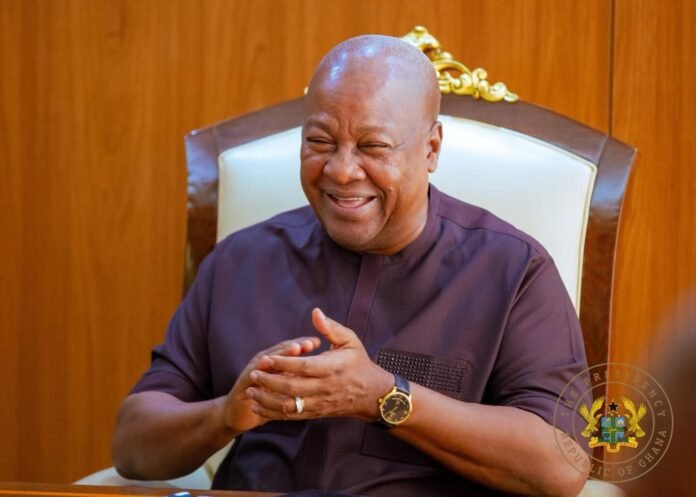
President John Dramani Mahama has announced that the amended Act now establishes a dedicated and sustainable funding framework for Free Education for learners with special needs.

The pronouncement, delivered before Parliament during the 2026 State of the Nation Address, marks what government describes as a decisive turn toward equity within Ghana’s educational order.

Long has the question of sustainable financing troubled special needs education in Ghana. Though policy commitments were proclaimed in years past, funding streams often proved uncertain. By amendment of the GETFund Act, the administration now anchors Free Education for learners with special needs within a defined statutory framework.

Commencing in the 2026 academic year, the measure ensures that learners with disabilities enrolled in recognised institutions shall not be hindered by financial encumbrance. It is a move intended not merely as relief, but as reform.

Education, the President observed, is not a favour extended at pleasure. It is a right grounded in justice and national purpose.

Beyond Rhetoric, Toward Implementation

The announcement forms part of a broader suite of inclusion measures. Earlier in the address, the President confirmed that the daily feeding grant for students in public special schools has been increased from GHS 8.00 to GHS 15.00 for the 2025 to 2026 academic year. For many institutions, this increment is no small matter. It speaks directly to nutrition, health, and dignity.

Moreover, a modern Special Needs School is to be constructed in Ho in the Volta Region, whilst the existing facility in Akropong, Akuapem, shall undergo rehabilitation and upgrade. The intention is plain. Infrastructure must match policy ambition.

RELATED ARTICLES


It has often been said in sober circles that special needs education is costly. Yet the counterpoint stands stronger. Exclusion costs more. Where learners are denied access, society forfeits talent, productivity, and cohesion.

By establishing a ring-fenced funding mechanism under GETFund, government seeks to ensure that support for learners with disabilities is neither episodic nor discretionary. In plain terms, the days of scrambling for arrears ought to be behind us.

Stakeholders within the disability advocacy community have received the development with cautious approval. Many note that legislation is one matter; implementation is another. As one education analyst remarked, “The framework is sound. Delivery must now be airtight.”

A Shift in the National Conversation

In recent years, discourse on inclusive education has moved from the margins toward the centre of policy debate. What once seemed aspirational now enters the realm of structured obligation.

President Mahama’s address placed special needs education squarely within the national transformation agenda. Not as charity. Not as tokenism. But as strategy.

In the final reckoning, the measure shall be judged not by its prose, but by its performance. Should funding remain consistent and oversight vigilant, Ghana may well look back upon this amendment as a turning point.

For now, the message from Parliament House was unmistakable. Inclusion is no longer an afterthought. It is policy, backed by law and ledger alike.

SONA 2026: Mahama Outlines Sweeping Education Reforms, Infrastructure Expansion and Teacher Housing Plan

Ghana’s Most Authentic Political News Platform

♥Copyright Notice: Content on This Website is Copyright Protected. No Part of this Content should be Reproduced without the Consent of the Author(s) or Recognition of the source of the Content.© 2026 Ellis Multimedia: New.EducationGhana.org All Rights Reserved.♥

Baba Sadiq Abdulai Abu Appointed Ghana’s High Commissioner Designate to Nigeria

0
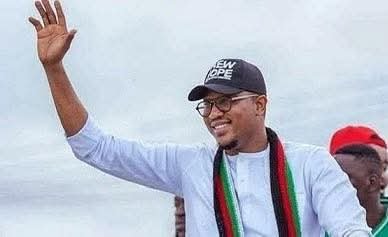
Baba Sadiq Abdulai Abu Appointed Ghana’s High Commissioner Designate to Nigeria

Ferdinand  | Education Ghana | March 3 |Baba Sadiq Abdulai Abu Appointed Ghana’s High Commissioner Designate to Nigeria

Creative entrepreneur Baba Sadiq Abdulai Abu has been appointed Ghana’s High Commissioner Designate to Nigeria.

The announcement was made on Sunday, March 1, 2026, by the Minister for Foreign Affairs, Hon. Okudzeto Ablakwa, in a post shared on his official Facebook page.


Baba Sadiq Abdulai Abu is widely known in Ghana’s creative and entertainment industry, having played a visible role in media production, talent development and youth entrepreneurship initiatives. His appointment marks a transition from the private creative sector into diplomatic service.

As High Commissioner Designate, he is expected to represent Ghana’s interests in Nigeria, strengthen bilateral relations and promote cooperation in trade, culture and regional security.

RELATED ARTICLES


Ghana–Nigeria Relations

Ghana and Nigeria maintain longstanding diplomatic and economic ties, anchored in regional frameworks such as the Economic Community of West African States. The High Commission in Abuja plays a strategic role in facilitating consular services, business engagement and people-to-people relations between the two countries.

The appointment is subject to the usual diplomatic processes, including agrément from the host country before the formal assumption of duty.

Further details regarding his swearing-in and posting are expected in the coming weeks.


Ghana’s Most Authentic Political News Platform

♥Copyright Notice: Content on This Website is Copyright Protected. No Part of this Content should be Reproduced without the Consent of the Author(s) or Recognition of the source of the Content.© 2026 Ellis Multimedia: New.EducationGhana.org All Rights Reserved.♥

Government to Construct 600 Basic Schools Nationwide to End “Schools Under Trees” – Apaak

0
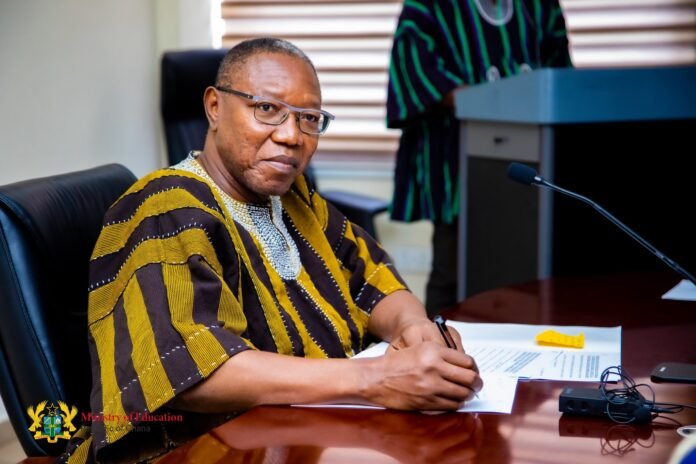
Government to Construct 600 Basic Schools Nationwide to End “Schools Under Trees” – Apaak

Ferdinand  | Education Ghana | March 3 |Government to Construct 600 Basic Schools Nationwide to End “Schools Under Trees” – Apaak

The Government has announced plans to construct 600 new basic school facilities across Ghana as part of efforts to eliminate the long-standing phenomenon of schools operating under trees.

Deputy Minister for Education Hon. Clement Appak , disclosed that the initiative will cover the construction of 200 junior high schools, 200 kindergarten blocks and 200 primary school blocks across the country.

RELATED ARTICLES


Addressing Infrastructure Deficits

Dr Apaak made the announcement during a courtesy call by 52 top Basic Education Certificate Examination awardees. He explained that rapid population growth and delayed infrastructure expansion have contributed significantly to the emergence of makeshift learning centres in many communities.

According to him, the current administration inherited more than 5,000 schools operating under trees and other temporary structures.

“As I speak, there are many parts of the country where we have sufficient populations for schools to start, and because, as a state, we are not paying heed to population growth, the communities themselves come together and start a school, and that is how schools-under-trees come to be,” he stated.

He added that government is making a deliberate and coordinated effort to eliminate the situation.

Backed by Budget and SONA Commitment

Dr Apaak noted that the plan was reaffirmed by President Mahama in the State of the Nation Address and is supported by allocations captured in the 2026 Budget.

The construction of the 600 facilities is expected to improve access to quality basic education, provide safer learning environments and reduce overcrowding in deprived communities.

Education stakeholders have long called for sustained investment in infrastructure to address inequities between urban and rural schools. The latest announcement signals renewed attention to foundational education as part of broader reforms within the sector.

Further details on timelines, funding mechanisms and regional distribution of the projects are expected to be released by the Ministry of Education in due course.

Ghana’s Most Authentic Political News Platform

♥Copyright Notice: Content on This Website is Copyright Protected. No Part of this Content should be Reproduced without the Consent of the Author(s) or Recognition of the source of the Content.© 2026 Ellis Multimedia: New.EducationGhana.org All Rights Reserved.♥

Schools Under Trees to End? Mahama Announces 600 New Classroom Blocks Nationwide

2
GES Directs Schools to Submit Data on MAHAMA WASH-Related Clubs by February 20 BECE

Ferdinand  | Education Ghana | March 2 | Schools Under Trees to End? Mahama Announces 600 New Classroom Blocks Nationwide

President John Dramani Mahama announces construction of 600 new classroom blocks in 2026 to eliminate schools under trees and improve basic education infrastructure across Ghana.

By Education Desk

President has announced a major infrastructure intervention aimed at eliminating the long-standing problem of “schools under trees” across Ghana.

Speaking during the 2026 State of the Nation Address in Parliament on Friday, February 27, 2026, the President revealed that government has programmed the construction of 600 new classroom blocks nationwide in the 2026 financial year.


200 KG, 200 Primary and 200 JHS Blocks

The intervention will include:

  • 200 Kindergarten blocks
  • 200 Primary school blocks
  • 200 Junior High School blocks

According to President Mahama, the initiative forms part of a broader policy shift to rebalance education investment in favour of basic education, which he described as the foundation of national development.

For years, sections of rural Ghana have struggled with inadequate classroom infrastructure, with pupils in some communities studying in makeshift structures or under trees. The situation has often been cited as a barrier to quality learning, particularly during the rainy season.

Improving Learning Conditions

Education analysts note that inadequate infrastructure affects attendance, teacher morale, and learning outcomes. The new classroom blocks are expected to provide safer, more conducive environments for teaching and learning.

The President indicated that addressing infrastructure gaps is essential to ensuring that foundational literacy, numeracy, and critical thinking skills are properly developed at the basic level.

The construction programme will be implemented alongside other reforms, including curriculum modernization and enhanced funding for basic schools.


RELATED ARTICLES


Complementary Funding Reforms

In addition to infrastructure expansion, President Mahama confirmed that government has fully cleared all outstanding Capitation Grant arrears owed to public basic schools.

He also announced that all outstanding BECE registration subsidies due to the have been settled.

These measures, according to government, are intended to restore financial stability and strengthen public confidence in the basic education system.

Part of Broader Education Transformation

The classroom construction initiative forms part of a comprehensive education reform agenda outlined in SONA 2026, which also includes:

  • Integration of robotics, coding, and artificial intelligence into the basic curriculum
  • Expansion of Technical and Vocational Education and Training centres
  • Free tertiary education support for persons with disabilities

Observers say eliminating schools under trees would represent a significant milestone in Ghana’s education development, particularly in underserved rural and peri-urban communities.

Closing the Infrastructure Gap

While previous administrations have made efforts to reduce the number of schools operating in temporary structures, infrastructure deficits persist in some districts.

The 600-classroom intervention signals renewed government commitment to addressing these disparities and improving equitable access to quality education.

Further details on project timelines, procurement processes, and regional distribution are expected to be announced in the 2026 budget implementation framework.

Ghana’s Most Authentic Political News Platform

♥Copyright Notice: Content on This Website is Copyright Protected. No Part of this Content should be Reproduced without the Consent of the Author(s) or Recognition of the source of the Content.© 2026 Ellis Multimedia: New.EducationGhana.org All Rights Reserved.♥

Government to Introduce Robotics, Coding and Artificial Intelligence in Basic School Curriculum

1
Government to SONA 2026 MAHAMA FEES Introduce Robotics, Coding and Artificial Intelligence in Basic School Curriculum

Ferdinand  | Education Ghana | March 2 | Government to Introduce Robotics, Coding and Artificial Intelligence in Basic School Curriculum

President John Dramani Mahama announces integration of robotics, coding and artificial intelligence into Ghana’s basic school curriculum as part of major education reforms under SONA 2026.

By Education Desk

The President has announced a comprehensive review of Ghana’s basic school curriculum to incorporate robotics, coding, and artificial intelligence education.

The policy direction was outlined during the 2026 State of the Nation Address delivered in Parliament on Friday, February 27, 2026. According to the President, the curriculum reform forms part of a broader effort to reposition Ghana’s education system for the demands of a technology-driven global economy.

Curriculum Review Underway

The Standards-Based Curriculum from Kindergarten to Primary Six is currently under review to integrate foundational digital skills. The proposed changes will introduce robotics and coding at the basic level while ensuring that artificial intelligence education is delivered in an age-appropriate and developmentally sensitive manner.

Government officials indicate that artificial intelligence concepts will not be limited to technical skills but will also include ethical use, digital responsibility, critical thinking, and human-centred values.

Education experts say early exposure to digital tools and computational thinking can strengthen problem-solving abilities and creativity among learners.

Preparing Learners for the Future Economy

President Mahama emphasised that Ghana must align its education system with emerging global trends in science, technology, engineering, and innovation. He noted that equipping children with digital literacy from an early age will improve competitiveness and workforce readiness in the long term.

The reform is also expected to support Ghana’s broader digital transformation agenda by building a pipeline of technologically skilled graduates.

Policy analysts observe that integrating robotics and coding into basic education could reduce future skills gaps in areas such as software development, automation, data science, and digital entrepreneurship.

Ethical and Responsible AI Education

A central feature of the reform is the emphasis on responsible integration of artificial intelligence. The curriculum will include guidance on ethical use of AI tools, critical evaluation of digital content, and awareness of online safety.

This approach reflects growing global discussions about the responsible use of generative artificial intelligence in educational settings.

By introducing AI literacy at an early stage, government aims to ensure that learners develop not only technical competence but also ethical judgment in digital environments.


RELATED ARTICLES


Investment in Teacher Training and Infrastructure

Although detailed implementation timelines were not disclosed during the address, successful integration of robotics and coding will require teacher capacity building, digital infrastructure upgrades, and access to learning devices.

Education stakeholders have stressed the need for sustained investment in teacher professional development to ensure effective classroom delivery.

The curriculum review aligns with other reforms announced in SONA 2026, including the construction of new classroom blocks and expanded funding for basic education.

Strengthening Ghana’s Education Foundation

Basic education remains the foundation of Ghana’s learning system, providing literacy, numeracy, and critical thinking skills. The introduction of robotics, coding, and artificial intelligence represents a strategic shift toward modernising foundational education.

Observers say the reform signals government’s intent to move beyond traditional curricula and prepare learners for the realities of the Fourth Industrial Revolution.

As the review process progresses, education authorities are expected to provide further guidance on phased implementation and assessment frameworks.

Ghana’s Most Authentic Political News Platform

♥Copyright Notice: Content on This Website is Copyright Protected. No Part of this Content should be Reproduced without the Consent of the Author(s) or Recognition of the source of the Content.© 2026 Ellis Multimedia: New.EducationGhana.org All Rights Reserved.♥

SONA 2026: Mahama Launches Free Tertiary Education for Persons with Disabilities Nationwide

3
SONA 2026: Mahama Outlines Sweeping GETFUND Education Reforms, Infrastructure Expansion and Teacher Housing Plan

Ferdinand  | Education Ghana | March 2 | SONA 2026: Mahama Launches Free Tertiary Education for Persons with Disabilities Nationwide

President John Dramani Mahama announces full implementation of Free Tertiary Education for Persons with Disabilities in SONA 2026, expanding inclusive access to universities and colleges across Ghana.


The President has announced the nationwide implementation of Free Tertiary Education for Persons with Disabilities, marking a major step toward inclusive higher education reform in Ghana.

The announcement was made during the 2026 State of the Nation Address delivered before Parliament on Friday, February 27, 2026. The President described the policy as both a moral obligation and a strategic investment in equity and national development.

Policy Now Fully Operational

According to President Mahama, the Free Tertiary Education Policy for Persons with Disabilities has been formally launched and is currently benefiting eligible students enrolled in public tertiary institutions across the country.

The intervention removes financial barriers for students with disabilities pursuing programmes in public universities, technical universities, and colleges of education. It covers approved academic-related fees and is designed to ensure that disability does not limit access to higher learning.

Education advocates have long called for stronger state support for learners with disabilities, citing systemic disadvantages and higher costs associated with assistive technologies, mobility, and specialised learning support.


Backed by Sustainable Funding

The policy operates within a strengthened legal and financial framework. Under amendments to the structure, dedicated funding mechanisms have been established to support free education for learners with special needs beginning in the 2026 academic year.

Government officials say this framework is designed to ensure sustainability and prevent funding interruptions that could affect beneficiaries.

RELATED ARTICLES


Advancing Inclusive Education

President Mahama emphasized that inclusive education strengthens social cohesion and national productivity. He noted that investing in persons with disabilities expands Ghana’s human capital base and promotes equal participation in economic life.

The initiative aligns with Ghana’s broader commitments under international disability rights frameworks and national inclusion policies aimed at reducing inequality in education and employment.

Stakeholders in the disability advocacy space have welcomed the move, describing it as a transformative intervention that could significantly increase tertiary enrolment among persons with disabilities.

Complementary Reforms in Special Needs Education

The free tertiary education policy forms part of a broader inclusion agenda announced during SONA 2026. Additional measures include:

  • Increased feeding grants for students in public special schools from GHS 8.00 to GHS 15.00
  • Construction of a modern Special Needs School in Ho in the Volta Region
  • Rehabilitation and upgrading of the Special Needs School in Akropong, Akuapem

These initiatives collectively signal a systemic approach to supporting learners with disabilities at both basic and tertiary levels.

Removing Barriers to Opportunity

Access to higher education remains a critical pathway to employment and social mobility. However, students with disabilities often face financial and structural barriers that limit progression beyond secondary school.

By eliminating tuition-related costs at the tertiary level, the government aims to improve enrolment rates, completion rates, and employment outcomes for persons with disabilities.

Strengthening Equity in Ghana’s Education System

The 2026 SONA places inclusive education at the centre of Ghana’s national transformation agenda. The Free Tertiary Education Policy for Persons with Disabilities reinforces the administration’s position that education reform must address both access and fairness.

As implementation expands in the 2026 academic year, education observers will be monitoring enrolment data and funding sustainability to assess the long-term impact of the initiative.

SONA 2026: Mahama Outlines Sweeping Education Reforms, Infrastructure Expansion and Teacher Housing Plan

Ghana’s Most Authentic Political News Platform

♥Copyright Notice: Content on This Website is Copyright Protected. No Part of this Content should be Reproduced without the Consent of the Author(s) or Recognition of the source of the Content.© 2026 Ellis Multimedia: New.EducationGhana.org All Rights Reserved.♥

Mahama Clears Capitation Grant Arrears and Settles BECE Subsidy Debt in Major Education Financing Reform

0
Mahama Clears Capitation Grant Arrears and Settles BECE Subsidy Debt in Major Education Financing Reform

Ferdinand  | Education Ghana | March 2 |  Mahama Clears Capitation Grant Arrears and Settles BECE Subsidy Debt in Major Education Financing Reform

President John Dramani Mahama announces full clearance of Capitation Grant arrears and BECE registration subsidy debts to WAEC in SONA 2026, boosting basic education funding and school stability across Ghana.


The President has announced the full clearance of outstanding Capitation Grant arrears owed to public basic schools and the settlement of all BECE registration subsidy debts due to the (WAEC).

The announcement was made during the 2026 State of the Nation Address delivered in Parliament on Friday, February 27, 2026, where the President described the move as a critical intervention to stabilise Ghana’s basic education financing system.

What the Capitation Grant Clearance Means

The Capitation Grant is a government-funded programme that provides per-pupil financial support to public basic schools to cover essential operational expenses, including teaching and learning materials, minor repairs, and administrative costs.

In recent years, delays in disbursement and arrears had affected school operations in some districts, with headteachers raising concerns about funding gaps.

President Mahama told Parliament that all outstanding arrears have now been fully paid, restoring confidence in the system and ensuring that public basic schools can function without financial uncertainty.

Education stakeholders say the clearance is expected to improve planning, procurement of instructional materials, and overall school management at the kindergarten, primary, and junior high school levels.

BECE Registration Subsidies Fully Settled

In addition to the Capitation Grant arrears, government has also cleared all outstanding BECE registration subsidies owed to WAEC.

The BECE subsidy ensures that final-year Junior High School students in public schools are registered for the Basic Education Certificate Examination without financial burden on parents.

The settlement of arrears to WAEC is expected to strengthen collaboration between government and the examination body while preventing disruptions in future examination processes.

Strengthening Basic Education Financing

Basic education remains the foundation of Ghana’s education system. It is at this level that learners acquire literacy, numeracy, critical thinking, and problem-solving skills that shape future academic and professional success.

The President noted that government is undertaking a broader policy shift to rebalance education investment in favour of basic education. Clearing arrears, he said, forms part of efforts to deepen coordination, accountability, and effectiveness within the sector.

Analysts believe the move sends a strong signal of fiscal prioritisation, particularly at a time when school infrastructure expansion and curriculum reforms are also underway.

Part of Wider Education Reforms

The arrears clearance complements other education reforms announced during SONA 2026, including:

  • Construction of 600 new classroom blocks nationwide
  • Integration of robotics, coding, and artificial intelligence into the basic school curriculum
  • Dedicated GETFund support for special needs education
  • Expansion of Technical and Vocational Education and Training (TVET) institutions

Together, these measures reflect a comprehensive approach aimed at strengthening access, equity, and quality in Ghana’s education system.

RELATED ARTICLES


GES Announces March 9–10 Midterm Break for Basic Schools

Boosting Confidence in Public Education

Education experts argue that predictable and timely funding is essential for maintaining teacher morale, ensuring smooth examination processes, and safeguarding the credibility of public education.

By clearing both Capitation Grant arrears and BECE registration debts, government aims to restore stability and improve trust among school administrators, teachers, parents, and examination authorities.

The announcement positions basic education financing as a central pillar of the administration’s broader national transformation agenda.

Ghana’s Most Authentic Political News Platform

♥Copyright Notice: Content on This Website is Copyright Protected. No Part of this Content should be Reproduced without the Consent of the Author(s) or Recognition of the source of the Content.© 2026 Ellis Multimedia: New.EducationGhana.org All Rights Reserved.♥

SONA 2026: Mahama Expands No-Fees-Stress Initiative to Benefit Over 220,000 First-Year Students

2
Government to SONA 2026 MAHAMA FEES Introduce Robotics, Coding and Artificial Intelligence in Basic School Curriculum

Ferdinand  | Education Ghana | March 1 |  SONA 2026: Mahama Expands No-Fees-Stress Initiative to Benefit Over 220,000 First-Year Students

President John Dramani Mahama announces expansion of the No-Fees-Stress Initiative in SONA 2026, targeting over 220,000 first-year tertiary students across Ghana. Full details on funding, eligibility, and impact.


President has announced a major expansion of the No-Fees-Stress Initiative, projecting that more than 220,000 first-year students in public tertiary institutions will benefit in the 2026 academic year.

Delivering the 2026 State of the Nation Address at Parliament House on Friday, February 27, 2026, the President described the policy as a central pillar of his administration’s Reset Agenda for education and national development.

Over 152,000 Students Already Benefited

According to President Mahama, 152,698 duly validated first-year students in public tertiary institutions benefited from the initiative during the 2025 academic year. With increasing enrolment figures and improved administrative coordination, the government expects the number of beneficiaries to exceed 220,000 in 2026.

The No-Fees-Stress Initiative eliminates the burden of upfront academic-related fees for first-year students admitted into public universities, technical universities, and colleges of education. The intervention is aimed at ensuring that students who gain admission are not denied access due to financial constraints.

Collaboration with Student Loan Trust Fund

The programme is being implemented in partnership with the to strengthen student financing mechanisms and improve sustainability.

In a significant policy expansion, law students are now eligible to access the national student loan scheme. This move broadens financial inclusion and supports professional education pathways that were previously constrained by funding limitations.

Addressing Access and Equity in Higher Education

Education analysts say the removal of admission-related financial barriers could significantly increase transition rates from senior high school to tertiary institutions, particularly among students from low-income households.

President Mahama emphasised that expanding access to tertiary education is essential to equipping Ghana’s youth with the skills required in a modern, technology-driven economy. He noted that education remains pivotal to Ghana’s transformation agenda and long-term economic competitiveness.

RELATED ARTICLES


Part of Broader Education Reforms

The expansion of the No-Fees-Stress Initiative forms part of a wider education reform package announced during SONA 2026. Other complementary measures include:

  • Free Tertiary Education for Persons with Disabilities
  • Increased funding for special needs education through the amended GETFund framework
  • Construction of new classroom blocks to address infrastructure gaps
  • Establishment of new technical universities to boost skills development

Together, these reforms are designed to promote inclusion, strengthen quality assurance, and align education outcomes with national development priorities.

Relief for Parents and Guardians

Beyond students, the initiative is expected to provide relief to parents and guardians who often face tight deadlines to mobilise funds for admission-related payments. Education stakeholders believe the policy could reduce cases of deferred admissions and financial dropouts at the beginning of academic sessions.

While some observers have called for detailed long-term financing plans, government maintains that the initiative is fully captured in the 2026 national budget framework.

Strengthening Human Capital Development

With projected beneficiaries surpassing 220,000 in 2026, the No-Fees-Stress Initiative is positioned to become one of the largest first-year tertiary support programmes in Ghana’s history.

The announcement reinforces the government’s commitment to expanding higher education access, reducing inequality, and investing in human capital as a driver of national growth.

Government to Introduce Robotics, Coding and Artificial Intelligence in Basic School Curriculum

Ghana’s Most Authentic Political News Platform

♥Copyright Notice: Content on This Website is Copyright Protected. No Part of this Content should be Reproduced without the Consent of the Author(s) or Recognition of the source of the Content.© 2026 Ellis Multimedia: New.EducationGhana.org All Rights Reserved.♥